
Chasing Ghosts
Yep, the excitement always fades

I have been working on ‘creative’ projects for most of my life and while I’ve learned a lot about what works and what doesn’t, there is one cycle I can never escape.
Strike while the iron is hot. A spark of inspiration. A bolt from the blue.
The romantic depiction of creativity is that you gaze deep within, make contact with the muse and are so consumed by inspiration that you are immediately compelled to begin work. The power of inspiration fuels you as you collapse the possibility space and produce a new masterpiece. This is an incredibly harmful model but not because it’s a lie. It’s really only half the story.
Every rush of excitement will, eventually, give way to a sobering return to reality.
All things alike go through their processes of activity, and then we see them return to their root. When plants have displayed their luxuriant growth, we see each of them return to its root. This returning to their root is what we call the state of stillness.
- Dao De Jing (Chapter 16)
Nothing lasts
This is… hard to accept.
I made more than 50 game prototypes in 2025, all of which sent me into a hyperfixated trance… in 2026 only one is being developed further:
Of my 269 Github repos almost all felt like a burning question to answer or a revolutionary new tool… Roughly 265 of them currently lie dormant.
Of my 198 Ableton tracks in the past 2 years, only 6 are fully released.
I have dozens of half-written drafts lying around.
You get the point, and so do I. Each idea that once consumed my imagination is eventually reduced to a file, a row in a table, or a faint echo of what was supposed to be interesting.
If you pay enough attention, you can see the sheen wearing off your ideas in real time but the default is to ignore the signals and cling harder. We tend to think our ideas are either rare and precious or a dime a dozen but the truth is far more subtle.
An idea is a relationship with an aspect of your imagination. They can be a fling, an infatuation, an obsession or… something more stable, caring and open. What we might call ‘love’ in another context: can you love your ideas enough to let them grow without smothering them? Can you bear with them while they test your patience? Can you choose this idea without knowing if it will pan out, or if other more ‘seductive’ ideas will come along? Can you let this idea go, not knowing if it will ever come back?
Snapping out of it
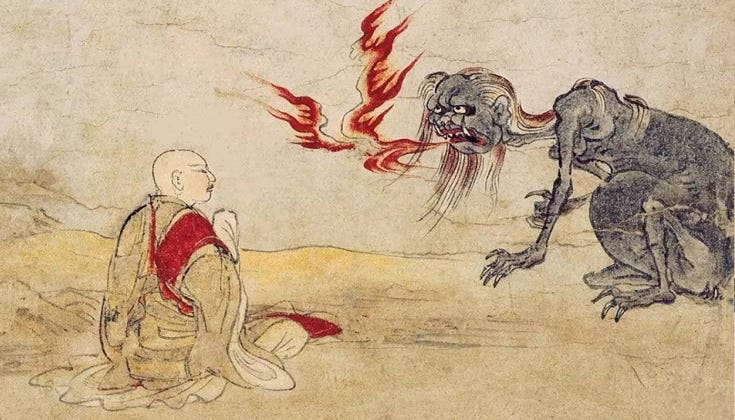
When you’re chasing a feeling what you’re chasing isn’t (yet) real, it’s a phantom just out of reach. If you get lost in chasing the thrill of creativity, you will become a hungry ghost: fuelled purely by the desire for more.
Outcome obsession is not new. But it is far easier to fall into this pattern today (with the power of technology™️) than ever before. First, algorithmic control of our attention can plant ideas in our heads which, in turn, cause us to chase after other people’s success, even subconsciously. Worse, with the advent of generative AI, everybody is able to race towards poorly developed, impersonal ideas that they have no relationship with.
One can go so quickly from thought to a seemingly polished artifact that you’ll send a shiny turd out into the world without even having caught a whiff.
All of that passion, the thrill, it will slip through your fingers — and what will last from your work? Your legacy in this world will not be determined by one big idea that you got Claude to vibecode. It will be determined by what you learned from your experiences, how you persevered in the face of adversity and how you gained insight into who you are, your relationship with reality, other people and your own mind.
It takes so much time
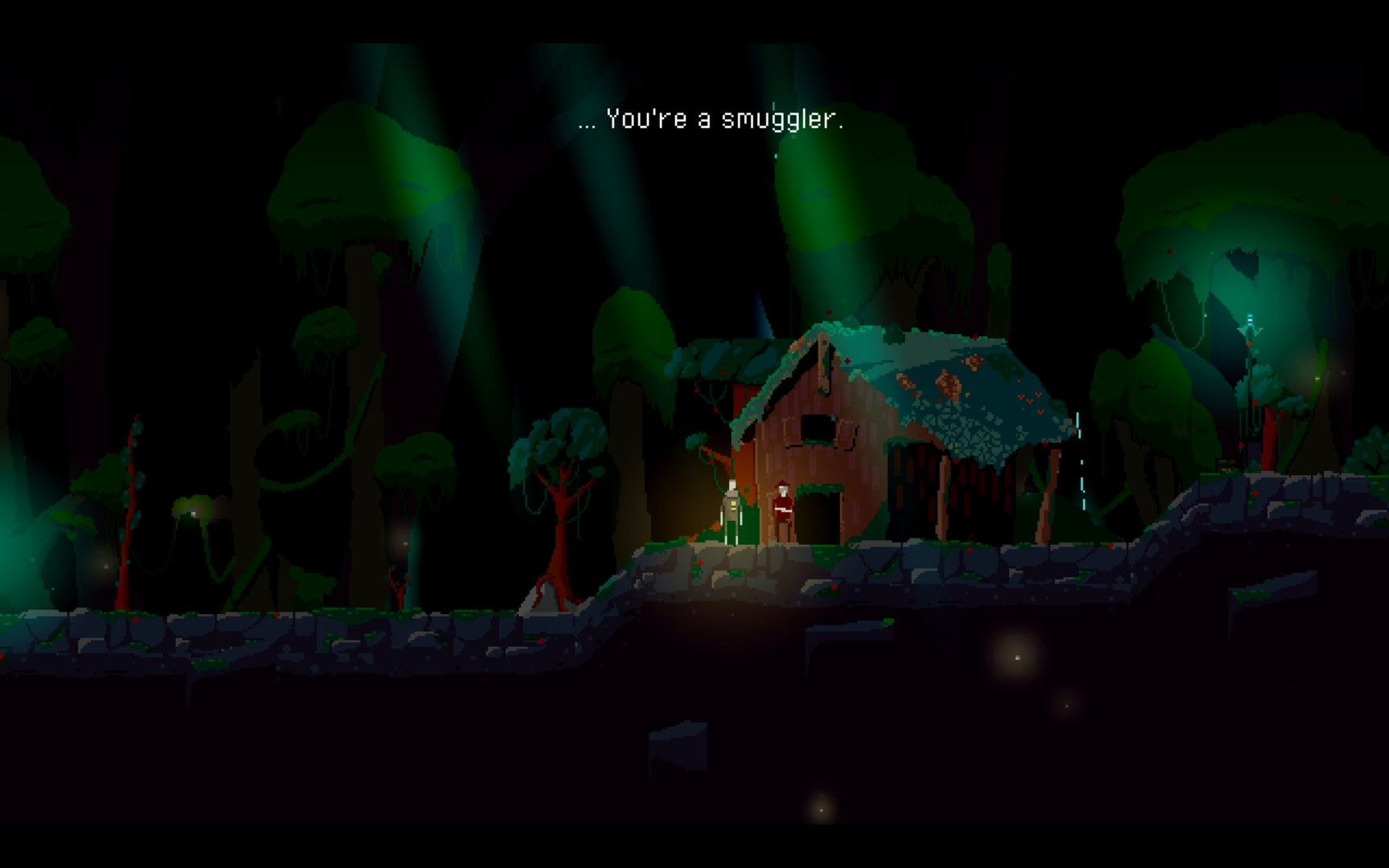
Soon, it will have been ten years since Ricky and I released The Thin Silence, our first commercial PC game. A game born out of our personal struggles: the aesthetics, tensions and philosophies that resonated with our 18-year-old selves. It has only been played by a couple thousand people. It doesn’t have very many Steam reviews, and yet I return to it frequently as perhaps one of the most meaningful and load-bearing things I’ve ever created, because I can see in retrospect the parts of myself that grew from struggling to understand the world that we live in and the place that someone is supposed to have in it — and channeling that into a game.
The Thin Silence took us more than five years of nights and weekends. We felt hopeless and lost many times during its development and, as a result, it feels like a hero’s journey that I’ve been through that I can point back to and say “I did it”.
For us, TTS was such a deep project that we can return to study it later. That set the foundation for what I think of as a true creative experience, but how many of us would take that path today? Would I?
You might be able to tell that this post is far less edited than usual by my conversational tone. I would have seen that as a weakness in the past but, given how sick I am of reading LLM-generated “think pieces”, I want to move this newsletter in the direction of saying what I think, the way that I think it and try and leave what little humanity remains on the Internet intact.
✌️ Ben